
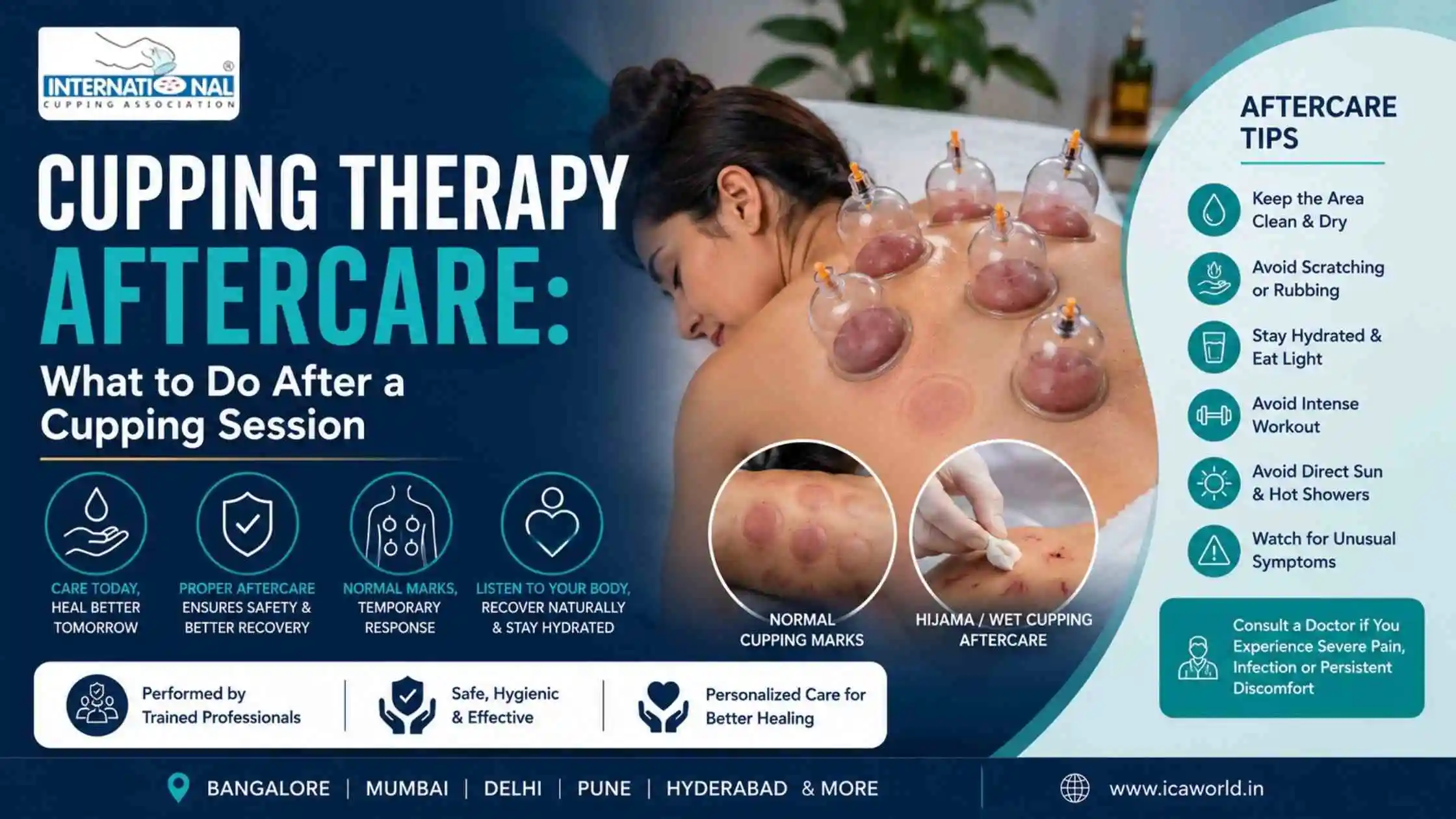
Cupping Therapy Aftercare: The Complete Guide to Recovery, Marks & Warning Signs
The cups come off, but the treatment isn’t quite over. Here’s exactly what to do — and what to avoid — after dry cupping, wet cupping, massage cupping or Hijama, plus the warning signs that mean it’s time to call a doctor.
Quick answer: After a cupping session: follow your practitioner’s individual aftercare instructions; keep any treated skin clean; avoid unnecessarily scratching, rubbing or irritating the treated area; give your body time to recover if you feel tired or mildly sore; stay aware of unusual skin changes or worsening symptoms; for wet cupping or Hijama, follow the specific wound-care instructions provided by your trained practitioner; and contact an appropriate healthcare professional if you develop signs of infection, severe pain, significant bleeding or burns.
Cupping marks are usually temporary, but the exact duration varies from person to person. Cleveland Clinic notes that marks commonly fade within about one to two weeks, although individual recovery can differ.
What Happens to Your Body After Cupping?
Cupping creates suction against the skin. This suction can cause temporary changes in the skin and small blood vessels close to the surface. After treatment, you may notice:
Circular red or purple marks
Mild skin tenderness
Temporary soreness
Tightness in the treated area
Mild sensitivity
Temporary discoloration
These effects can vary depending on the type of cupping, suction intensity, treatment area, individual skin response and other factors. Cleveland Clinic explains that cupping can cause circular marks that may resemble bruises and generally fade over time.
The appearance of marks does not necessarily mean a session was more effective. A darker mark should not automatically be interpreted as evidence that “more toxins were removed” or that the treatment was more successful — such claims are not established by strong clinical evidence.
How Long Do Cupping Marks Last?
There is no single answer for everyone. Cupping marks may fade over several days, and some can remain visible for around one to two weeks. Individual skin response, treatment intensity and the type of cupping used can all influence how long the discoloration remains.
You should generally avoid trying to aggressively remove the marks — they are not something that needs to be scrubbed away. Instead, allow the skin to recover naturally and follow your practitioner’s instructions.
Are Cupping Marks Normal?
Yes, temporary marks are a common effect of cupping. Cupping works through suction, and the resulting pressure can produce visible circular discoloration on the skin. The National Center for Complementary and Integrative Health notes that cupping leaves temporary marks and can also cause side effects such as persistent skin discoloration, scars, burns and infections.
This means there is an important difference between expected temporary discoloration and a potentially concerning skin reaction. If the area becomes increasingly painful, hot, swollen, increasingly red or starts producing pus or other unusual discharge, it should be assessed by an appropriate healthcare professional. Cleveland Clinic identifies worsening pain, fever and signs of skin infection as reasons to contact a healthcare provider.
What to Do Immediately After Cupping Therapy
1. Follow Your Practitioner’s Aftercare Instructions: Your practitioner knows which technique was used and which areas were treated. Aftercare can differ between dry cupping and wet cupping — don’t assume advice for dry cupping automatically applies to wet cupping.
2. Avoid Scratching or Aggressively Rubbing the Area: Cupping can temporarily make the skin sensitive. Avoid unnecessary scratching, harsh rubbing or aggressive massage directly over freshly treated areas — if the skin feels tender, allow it time to settle.
3. Keep Treated Areas Clean: Basic skin hygiene matters after any procedure that affects the skin — particularly after wet cupping or Hijama, where the skin has been punctured. Cleveland Clinic recommends clean hands before touching the area and appropriate wound cleaning rather than irritating substances such as rubbing alcohol or hydrogen peroxide. For wet cupping, your practitioner should provide individualized wound-care instructions.
🩹
Good aftercare starts with clear instructions before you leave the treatment room
Wet Cupping Aftercare: What Is Different?
Wet cupping, commonly known as Hijama, involves controlled skin puncturing and blood exposure, so aftercare is different from ordinary dry cupping. The treated areas should be managed according to the practitioner’s wound-care instructions. Important considerations include:
- Keeping the area clean
- Avoiding unnecessary touching
- Following dressing instructions where provided
- Monitoring for unusual bleeding
- Monitoring for signs of infection
- Avoiding practices that may irritate an open or healing area
Because wet cupping involves blood exposure, proper hygiene and infection-control practices are particularly important. NCCIH notes that contaminated cupping equipment can potentially spread bloodborne infections when appropriate sterilization is not used — one reason wet cupping should only be performed by appropriately trained practitioners using appropriate infection-control procedures.
How to Take Care of Cupping Marks
If you have temporary cupping marks, the best approach is usually to leave the skin alone and allow it to recover naturally.
✅ Do
- Keep the area clean
- Follow your practitioner’s instructions
- Wear comfortable clothing if the area is sensitive
- Observe how the marks change over the following days
- Contact a healthcare professional if symptoms become unusual or severe
🚫 Avoid
- Aggressive scrubbing
- Excessive scratching
- Picking at irritated skin
- Applying irritating products without professional advice
- Trying to force the marks to disappear quickly
Remember: cupping marks are temporary skin responses, not a target that needs to be intensified or removed immediately.
Can You Shower After Cupping?
The appropriate answer depends on the type of treatment and the practitioner’s specific instructions. For dry cupping, ask your practitioner when they recommend returning to your normal bathing routine, particularly if the skin feels sensitive. For wet cupping or Hijama, the treated areas may involve superficial skin wounds, so follow the practitioner’s wound-care and bathing instructions rather than relying on generic advice. If your practitioner has placed a dressing, follow their instructions regarding when and how it should be changed or removed.
Can You Exercise After Cupping Therapy?
Whether you should exercise immediately after cupping depends on the individual, the treatment area, treatment intensity and how you feel. If the treated area is sore or sensitive, strenuous exercise that places significant stress on that area may be uncomfortable. A practical approach is to listen to your body and follow the practitioner’s recommendations. If you have received cupping as part of a sports recovery routine, discuss your training schedule with your practitioner before the session. People looking for cupping treatment in Bangalore or cupping therapy in Mumbai should mention their exercise routine during the consultation so the practitioner can provide more relevant guidance.
Can You Massage Cupping Marks?
It is generally better not to aggressively massage freshly treated areas, since the skin may already be sensitive following suction. If you are considering massage or another therapy after cupping, ask your practitioner whether it is appropriate and when it can be performed safely. Avoid assuming that stronger pressure will make the marks disappear faster.
Should You Apply Oil or Cream After Cupping?
There is no universal requirement to apply a particular oil, cream or home remedy after cupping. If your practitioner recommends a specific product, follow their instructions — otherwise avoid applying irritating products to sensitive or punctured skin without professional guidance. This is especially important after wet cupping, where the skin requires appropriate wound care.
What Should You Eat After Cupping?
There is a lot of advice online about special foods, fasting routines and “detox diets” after cupping. However, there is no strong evidence that everyone needs a special post-cupping diet. Instead, focus on normal balanced nutrition and follow any individualized advice provided by your healthcare or therapy professional. Avoid making exaggerated “detox” claims around cupping — current evidence does not establish that cupping removes toxins from the body in the way commonly claimed online. NCCIH states that research on cupping is limited and that evidence is not strong enough to establish benefits for many conditions.
Should You Drink More Water After Cupping?
Staying adequately hydrated is generally a sensible part of everyday health, but there is no strong evidence that drinking excessive amounts of water “flushes out toxins” after cupping. You do not need to force yourself to drink unusually large amounts of water simply because you had a cupping session — drink according to your normal needs and any advice provided by your healthcare professional.
What Activities Should You Avoid After Cupping?
There is no universal list of activities that every person must avoid after cupping. However, if your skin is tender or you have received wet cupping, it is sensible to avoid activities that unnecessarily irritate the treated area. Depending on the treatment and individual circumstances, your practitioner may recommend temporarily avoiding:
- Intense exercise
- Aggressive massage
- Scratching or rubbing
- Activities that expose healing skin to unnecessary contamination
- Anything that causes significant discomfort
Your practitioner’s advice should take priority because they know the treatment performed and the condition of the treated area.
How to Recover After Cupping Therapy
A simple cupping recovery routine can focus on three principles:
🛡️
Protect
Avoid unnecessary irritation to the treated skin.
👀
Observe
Pay attention to how the skin and your overall condition change after the session.
🌱
Recover
Give your body appropriate time to return to its normal routine.
Cupping does not need to be followed by an elaborate recovery protocol. The most important thing is appropriate aftercare and recognizing when something does not look or feel normal.
Dry Cupping Aftercare
Dry cupping does not intentionally puncture the skin, so aftercare generally focuses on managing temporary skin marks and sensitivity. After dry cupping:
- Allow the treated skin to settle
- Avoid aggressive rubbing
- Follow the practitioner’s recommendations
- Monitor unusual swelling, pain or skin changes
- Allow the marks to fade naturally
Dry cupping can still cause burns, persistent discoloration, scars or infection in some circumstances, particularly when performed improperly. Therefore, “non-invasive” does not mean “completely risk-free.”
Wet Cupping and Hijama Aftercare
Wet cupping requires greater attention because the skin is punctured. After Hijama, your practitioner should explain:
- How to care for the treated areas
- Whether a dressing is required
- How to keep the area clean
- What signs of infection to watch for
- What to do if bleeding continues
- When to seek medical attention
- When normal activities can be resumed
If you experience persistent bleeding or signs of infection, seek appropriate medical care rather than attempting to manage a worsening problem yourself.
When Should You Seek Medical Attention After Cupping?
Most people expect some temporary skin changes after cupping. However, certain symptoms require attention. Contact an appropriate healthcare professional if you experience:
⚠️
Severe or Worsening Pain
Mild tenderness can occur, but severe or progressively worsening pain should not simply be ignored.
🔴
Increasing Redness or Swelling
Especially when redness spreads beyond the treatment area.
🌡️
Heat Around the Area
A hot, increasingly painful area can be a warning sign of infection.
🧫
Pus or Unusual Discharge
This should be assessed by a healthcare professional.
🤒
Fever or Chills
Fever combined with worsening skin symptoms can indicate infection.
🩸
Significant or Persistent Bleeding
This is particularly important following wet cupping.
🔥
Burns
Fire cupping can cause burns if performed improperly. Burns require appropriate assessment and care.
Cleveland Clinic specifically recommends contacting a healthcare provider for burns, extreme pain or soreness, fever or other signs of skin infection after cupping.
🚑
Worsening pain, fever, pus or heavy bleeding are never “normal aftercare”
Cupping Therapy Aftercare for People in Bangalore
For people receiving cupping therapy in Bangalore, aftercare can be especially relevant for busy professionals who may return to work, commuting or exercise soon after a session. If you have a scheduled session, ask your practitioner before treatment:
- Can I return to work immediately?
- Can I exercise later the same day?
- When can I shower?
- How should I care for the treated area?
- How long should I expect the marks to remain?
- What symptoms should make me contact the centre or a healthcare professional?
ICA provides cupping treatment in Bangalore, and people considering a session can discuss treatment and aftercare requirements with the centre before proceeding. For those interested in learning professionally, ICA also provides a Cupping Therapy Course in Bangalore, combining theoretical and practical learning.
Cupping Therapy Aftercare in Mumbai
Mumbai clients may have similar concerns, especially when fitting therapy around work, commuting, gym sessions and daily activities. If you are looking for cupping therapy in Mumbai, ask the practitioner about aftercare before the session begins — this is particularly important if you are receiving wet cupping or Hijama, because the treated areas require different care from ordinary dry cupping. ICA provides cupping services in Mumbai, including dry cupping, wet cupping and massage cupping. People interested in professional education can also explore the Cupping Therapist Course in Mumbai and related ICA training programs.
Cupping Aftercare for Athletes and Fitness Enthusiasts
Many people explore cupping as part of complementary sports and recovery routines. If you regularly participate in:
Gym workouts
Running
Football
Cricket
Cycling
Strength training
Martial arts
Yoga
Other sports
tell your practitioner about your training schedule. This allows the practitioner to provide more relevant guidance about the timing of treatment and post-session activity. Do not assume that a stronger cupping session will necessarily produce better results — cupping can cause temporary soreness and skin discoloration, and the evidence for many claimed benefits remains limited.
Common Cupping Aftercare Mistakes to Avoid
🧽
Scrubbing the Marks
Cupping marks do not need aggressive exfoliation.
🎯
“Darker = Better” Myth
The appearance of a mark should not be used as a measure of therapeutic effectiveness.
😖
Ignoring Severe Pain
Significant or worsening pain should be evaluated rather than dismissed as normal recovery.
🧪
Random Home Remedies
Don’t apply potentially irritating substances to sensitive or punctured skin without professional guidance.
🧼
Ignoring Hygiene After Wet Cupping
Wet cupping involves skin puncturing and blood exposure — appropriate wound care and hygiene are important.
⏳
Delaying Medical Treatment
Cupping should not be used as a reason to postpone appropriate medical diagnosis or treatment. NCCIH advises against using complementary practices as substitutes for proven conventional care.
Does Cupping Aftercare Differ Between Dry and Wet Cupping?
Yes. The main difference is whether the skin has been punctured.
NCCIH confirms that dry cupping does not involve skin piercing, while wet cupping does. It also highlights infection risks when equipment becomes contaminated with blood and is not properly sterilized.
How Practitioners Can Improve Cupping Aftercare Education
Cupping aftercare should not begin only when the client leaves the treatment room. A professional cupping therapy practitioner should explain aftercare before the client leaves. A good aftercare explanation can cover:
✅
What Is Normal?
Temporary marks, mild tenderness and sensitivity may occur.
🚫
What Should You Avoid?
Explain activities that could unnecessarily irritate the treated area.
🩹
How Should Skin Be Cared For?
Provide appropriate instructions based on the technique.
🚑
When Should You Seek Help?
Explain warning signs such as worsening pain, spreading redness, fever, pus or significant bleeding.
📞
Who Should the Client Contact?
Provide clear instructions for contacting the practitioner or seeking appropriate healthcare.
This is one reason professional cupping therapy training should cover not only cup placement but also client communication, safety and aftercare.
Why Professional Cupping Training Matters
Aftercare is one part of a larger professional responsibility. A properly trained cupping therapist should understand:
- Cupping techniques
- Basic anatomy
- Client assessment
- Contraindications
- Hygiene
- Infection control
- Treatment planning
- Client communication
- Aftercare
- Professional limitations
For people interested in becoming a professional practitioner, ICA offers programs including the Cupping Therapist Course, Cupping Therapy Assistant Course and Hijama Cupping Therapy Course. Learning how to perform a technique is only one part of becoming a responsible practitioner — knowing when to modify treatment, when to stop and when to refer a client is equally important. You can also read more in our guide on how to become a certified cupping therapist in India.
How ICAWORLD Supports Professional Cupping Education
ICAWORLD provides cupping therapy education and treatment services across multiple locations in India. Its training portfolio includes:
Hijama Cupping Therapy Course
For people searching for cupping therapy training in Bangalore, ICA offers location-specific training options. For students in Mumbai, ICA also provides cupping therapist training in Mumbai. For clients, ICA provides cupping treatment services in several Indian cities. This combination of education and treatment allows ICAWORLD to build a broader topical presence around cupping therapy, professional training, practitioner skills and responsible client care.
Frequently Asked Questions About Cupping Therapy Aftercare
1. What should I do immediately after cupping therapy?
Follow your practitioner’s aftercare instructions, keep the treated area appropriately clean, avoid unnecessary irritation and monitor how you feel. If you received wet cupping, follow the specific wound-care instructions provided by your practitioner.
2. How long do cupping marks last?
Cupping marks commonly fade over several days and may remain visible for around one to two weeks, although recovery varies between individuals.
3. Are cupping marks normal?
Yes, temporary circular discoloration is a common effect of cupping. However, persistent or worsening skin changes should be assessed appropriately.
4. Can I shower after cupping?
Ask your practitioner because advice can differ depending on the technique. After wet cupping, follow the specific instructions provided for the punctured areas.
5. Can I exercise after cupping?
It depends on the treatment and how you feel. If the treated area is sore or sensitive, discuss your exercise plans with your practitioner before returning to intense activity.
6. Can I massage cupping marks?
Avoid aggressive massage over freshly treated areas. Ask your practitioner when massage is appropriate if you want additional treatment.
7. How do I make cupping marks disappear faster?
There is no need to aggressively scrub or treat the marks. They generally fade naturally. Avoid irritating the skin and follow your practitioner’s aftercare guidance.
8. What should I apply to cupping marks?
There is no universal product that everyone needs to apply. Follow your practitioner’s recommendations and avoid irritating products, particularly on sensitive or punctured skin.
9. What is the difference between dry cupping aftercare and wet cupping aftercare?
Dry cupping mainly requires care for temporary marks and skin sensitivity. Wet cupping requires additional attention because the skin has been punctured and blood exposure has occurred.
10. When should I worry about cupping marks?
Seek medical advice if the area becomes increasingly painful, hot, swollen or red, or if you develop pus, fever, burns or other concerning symptoms.
11. Is cupping therapy safe?
Cupping can have side effects, including temporary marks, persistent discoloration, burns, scars and infections. Safety depends on the technique, the person receiving treatment and how appropriately the procedure is performed.
12. Is wet cupping aftercare different from Hijama aftercare?
Wet cupping and Hijama commonly refer to the same general technique, so aftercare needs to account for the fact that the skin has been punctured. Follow the specific wound-care instructions provided by the trained practitioner.
13. Can I go to work after cupping therapy?
Many people may return to normal activities depending on how they feel and what type of treatment they received. If you have significant soreness or received wet cupping, ask your practitioner about your specific situation.
14. Can I get cupping therapy in Bangalore?
Yes. ICA provides cupping treatment services in Bangalore. Clients should discuss the appropriate technique, treatment expectations and aftercare with the practitioner before the session.
15. Where can I get cupping therapy in Mumbai?
ICA provides cupping treatment services in Mumbai, including dry cupping, wet cupping and massage cupping. Ask the centre about the treatment process and aftercare before booking.
Final Takeaway
Cupping therapy aftercare does not have to be complicated. The most important steps are to follow your practitioner’s instructions, protect the treated skin, avoid unnecessary irritation, allow temporary cupping marks to fade naturally and pay attention to symptoms that could indicate a complication. For dry cupping, aftercare generally focuses on skin sensitivity and temporary marks. For wet cupping or Hijama, additional wound care and infection-control considerations apply because the skin has been punctured.
Most importantly, do not judge the success of a session by how dark the marks appear — cupping marks are a skin response and are not a scientifically established measurement of treatment effectiveness. If you are considering cupping therapy in Bangalore, cupping therapy in Mumbai, or another Indian city, choose a trained practitioner and ask about the procedure, hygiene standards, expected effects and aftercare before beginning treatment.
And for professionals interested in the field, proper cupping therapy training should include not only treatment techniques but also client assessment, safety, hygiene, communication and aftercare.
Good cupping practice does not end when the cups are removed. Responsible aftercare is part of responsible therapy.