
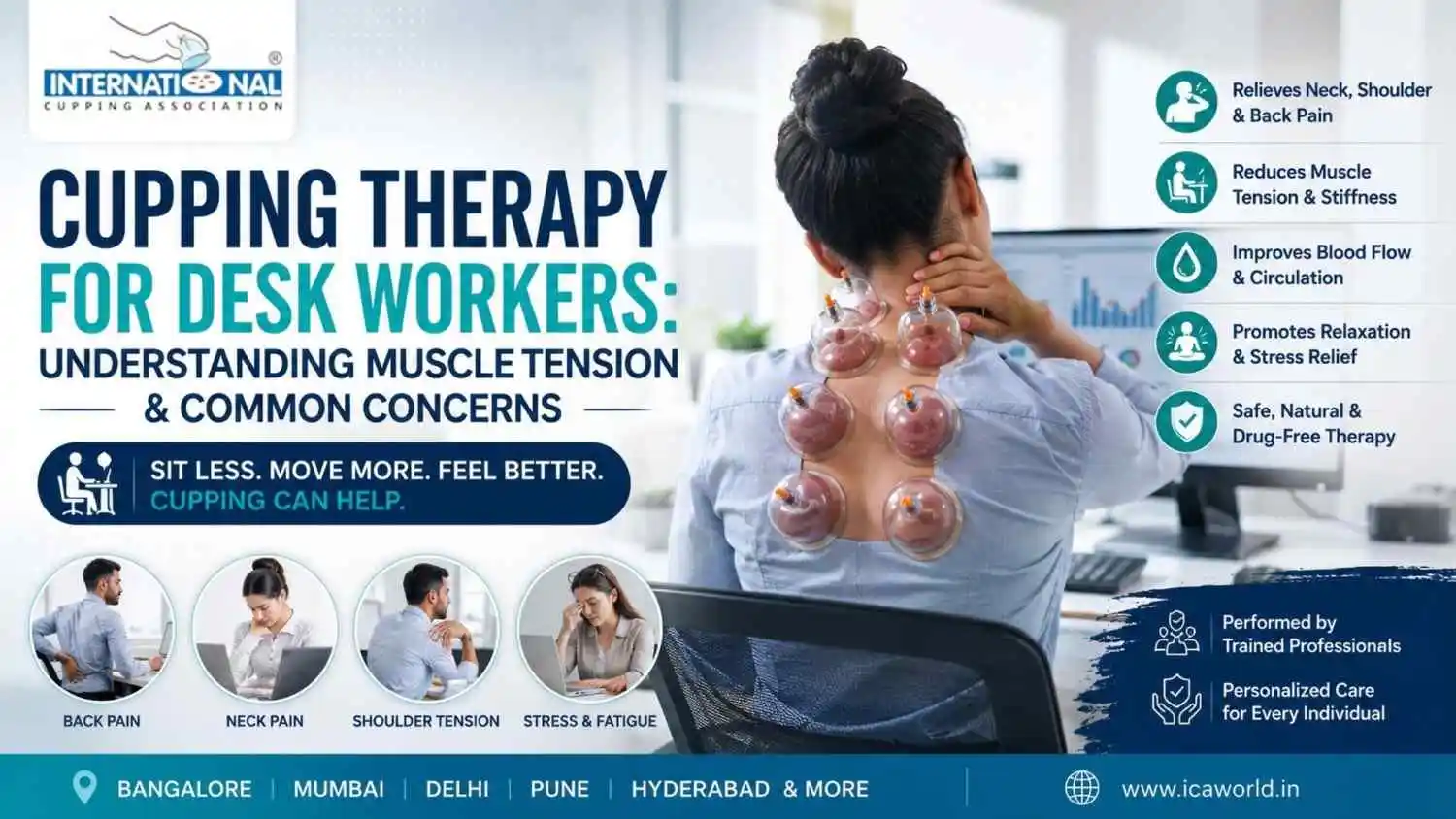
Cupping Therapy for Desk Workers: Can It Help With Back and Neck Tension?
Eight hours in a chair can hurt more than a job that involves heavy lifting. Here’s an honest look at whether cupping actually helps desk-related back and neck tension — and what has to happen alongside it.
Quick answer: Cupping may help some people experience short-term relief from back, neck or muscle discomfort, but it is not a standalone solution for prolonged desk-related pain. Desk workers should also address the factors contributing to discomfort, such as prolonged sitting, limited movement, workstation setup, poor sleep, inadequate physical activity or repetitive postures. A practical approach is: cupping, when appropriate + ergonomic improvements + regular movement + strengthening + stretching/mobility + appropriate professional assessment.
If pain is persistent, severe, worsening or associated with symptoms such as numbness, weakness or other concerning signs, seek evaluation from an appropriate healthcare professional rather than relying solely on complementary therapy.
Sitting at a desk for several hours can become physically demanding even when the job itself does not involve heavy lifting. Long periods of computer use, limited movement, poorly adjusted workstations and repetitive postures can contribute to discomfort around the neck, shoulders, upper back and lower back. This has led many office professionals to explore complementary approaches such as cupping therapy for back pain, massage, physiotherapy, stretching and mobility exercises. But can cupping actually help desk workers?
Cupping therapy may provide short-term relief from pain or muscle discomfort for some people, but it should not be considered a guaranteed treatment for desk-related pain or a replacement for proper ergonomic changes, exercise, physiotherapy or medical evaluation when needed.
Research on cupping for low-back pain is promising in some studies but remains mixed overall. A 2024 systematic review of randomized trials found improvements in some pain outcomes, while also noting substantial variation between studies and uncertainty about longer-term effects. NCCIH likewise describes the evidence for cupping and pain as limited in quality. For professionals searching for cupping therapy in Bangalore, cupping therapy in Mumbai, or complementary support for desk job pain, understanding where cupping fits into a broader approach is important.
Why Do Desk Workers Experience Muscle Tension?
The human body is designed for movement. However, modern office work can involve sitting in one position for long periods while looking at a computer screen, typing, using a mouse or attending virtual meetings. Over time, this may contribute to:
- Neck stiffness
- Shoulder tightness
- Upper-back discomfort
- Lower-back discomfort
- Muscle fatigue
- Reduced movement
- Headaches associated with neck tension
- General feelings of physical stiffness
Not every desk worker will develop these symptoms, and posture alone is not always the cause of pain. Pain is influenced by multiple factors, including physical activity, stress, sleep, previous injuries, workload and individual health. That is why treating the person rather than simply treating their posture is important.
What Is Desk Job Pain?
“Desk job pain” is not a specific medical diagnosis. It is a general term people use to describe discomfort that may develop around:
🦴
Neck
Long periods of computer work or phone use can coincide with neck stiffness or discomfort.
💪
Shoulders
Static positions and repetitive keyboard or mouse use may contribute to perceived shoulder tension.
🔺
Upper Back
Muscles around the upper back and shoulder blades may feel tight after prolonged sitting.
🪑
Lower Back
Long periods of sitting can be associated with lower-back discomfort, particularly with low physical activity.
Importantly, persistent pain should not automatically be blamed on sitting. If symptoms continue despite changes to activity and routine, professional assessment may be appropriate.
What Is Cupping Therapy?
Cupping therapy involves placing cups against the skin and creating suction. The suction creates negative pressure that lifts the skin and superficial tissues into the cup. Different forms include:
🫙
Dry Cupping
Does not intentionally pierce the skin. Often the starting point for desk-related muscle tension.
🩸
Wet Cupping / Hijama
Involves skin puncturing and blood exposure — requires additional precautions.
💆
Massage / Moving Cupping
Cups are moved across lubricated skin, often within a broader soft-tissue session.
🔥
Fire Cupping
Heat creates suction before placement, where applicable — requires trained handling.
For desk-related muscle tension, practitioners may consider non-invasive approaches such as dry or massage cupping depending on the individual’s situation. The appropriate technique should be determined after consultation rather than assuming that one method is suitable for everyone.
💻
Desk-related tension needs movement and ergonomics, not just a treatment session
How Might Cupping Relate to Muscle Tension?
The exact mechanisms behind the effects of cupping are not fully established. Cupping creates suction against the skin and produces local changes in the treated tissues and blood flow. Some people report temporary changes in pain, tightness or mobility after treatment. However, claims that cupping “removes toxins,” “cleans the blood” or permanently corrects muscular imbalances should be treated cautiously.
NCCIH notes that research on cupping is limited and that evidence is not strong enough to establish its effectiveness for many conditions. For a desk worker, the more realistic goal is to consider whether cupping may complement other strategies for managing discomfort — not to expect it to permanently fix the underlying reason for the discomfort.
Cupping Therapy for Back Pain in Desk Workers
Lower-back discomfort is one of the most common concerns associated with prolonged sedentary lifestyles. Research specifically examining cupping for low-back pain has produced some encouraging findings. A 2024 systematic review and meta-analysis of 11 randomized trials involving 921 participants reported significant improvements in certain pain outcomes, although results varied according to treatment duration, cupping technique, treatment location and type of low-back pain. The authors also noted substantial heterogeneity and called for further research.
This is important for desk workers because evidence that cupping can reduce pain in some low-back-pain populations does not mean every case of office-related back pain will respond to cupping. The cause of the pain still matters.
Cupping for Neck Pain and Shoulder Tension
Neck and shoulder discomfort is another common complaint among computer users. A 2026 systematic review and meta-analysis of nine randomized controlled trials involving 401 adults with chronic neck pain found improvements in pain intensity, functional disability, quality of life and range of motion, although the authors also noted methodological limitations in several studies. This newer evidence makes cupping an interesting complementary option for some people with persistent neck discomfort.
However, desk workers should still consider:
- Screen height
- Chair setup
- Keyboard and mouse positioning
- Break frequency
- Physical activity
- Strength training
- Stress
- Sleep quality
Cupping should complement these measures rather than replace them.
Can Cupping Help With “Computer Neck”?
“Computer neck” or “tech neck” are informal terms often used for neck discomfort associated with prolonged screen use. The symptoms can include:
- Neck stiffness
- Shoulder tension
- Upper-back discomfort
- Headaches
- Reduced comfortable neck movement
Cupping may provide short-term symptom relief for some individuals, but it does not automatically change the habits or workstation factors contributing to the problem. For example, if someone receives cupping for neck tension but continues sitting for eight hours without movement breaks, the underlying contributors may remain. Therefore: treat the discomfort and address the routine that contributes to it.
Cupping Therapy vs Massage for Desk Workers
Both cupping and massage are used as complementary approaches for muscle discomfort, but they work differently. Massage uses manual pressure and movement of soft tissues, while cupping uses suction applied through cups. Some practitioners may use massage and cupping within the same session. There is no universal answer regarding which is “better” — the appropriate choice depends on the individual’s symptoms, preferences, health history and professional assessment. NCCIH notes that massage may provide short-term benefits for some neck and shoulder pain, while evidence for low-back pain is less certain.
Cupping Therapy vs Physiotherapy for Desk Pain
This is an important distinction. Cupping therapy and physiotherapy serve different purposes. Physiotherapy can involve assessment, therapeutic exercise, movement retraining, rehabilitation, education and other interventions depending on the person’s condition. Cupping is a complementary therapy that may be incorporated into a broader wellness or pain-management approach. If a desk worker has persistent back or neck pain, especially following an injury, physiotherapy or medical evaluation may be more appropriate than relying solely on cupping. Cupping should not delay diagnosis or treatment of an underlying condition.
How Can Desk Workers Reduce Muscle Tension?
Cupping should not be the first or only strategy. Small changes to the workday can make a significant difference to movement habits.
🚶
1. Take Regular Movement Breaks
Instead of remaining seated continuously, get up periodically. Walk around, refill your water bottle or do a short mobility routine. Break up long periods of uninterrupted sitting.
🖥️
2. Adjust Your Workstation
Check screen height, chair height, keyboard position, mouse position, foot support and desk height. The goal is a comfortable setup that allows regular movement, not one “perfect posture.”
🏋️
3. Strengthen the Body
Regular resistance training can support general physical capacity — upper back, shoulders, core, glutes and lower body. A qualified professional can help develop an appropriate program.
🤸
4. Include Mobility Work
Gentle neck movement, shoulder movements, thoracic mobility, hip mobility and walking. Exercises should be appropriate for the individual and should not worsen pain.
🚴
5. Improve General Physical Activity
A desk job does not have to mean a sedentary lifestyle outside working hours. Walking, cycling, gym training, yoga or other enjoyable activities can help increase overall movement.
When Should a Desk Worker Consider Cupping?
Cupping may be worth discussing with a trained practitioner if you experience:
- Recurring muscle tightness
- Mild to moderate muscular discomfort
- Neck and shoulder tension
- Non-specific back discomfort
- A preference for complementary approaches
- Temporary stiffness associated with prolonged desk work
However, the treatment should be individualized. A practitioner should consider your health history, current symptoms and treatment goals before recommending a technique. ICAWORLD’s Bangalore cupping service states that consultations consider medical history, lifestyle and health goals before recommending specific cupping approaches.
When Should You Not Rely on Cupping for Back or Neck Pain?
There are situations where self-managing pain with complementary therapy is not appropriate. Seek medical or professional assessment if you have:
- Severe or rapidly worsening pain
- Significant weakness
- Numbness or loss of sensation
- Pain following major trauma
- Loss of bladder or bowel control
- Unexplained weight loss
- Fever associated with severe pain
- Persistent symptoms that are not improving
- Significant limitation of movement
- Symptoms that interfere substantially with daily activities
These symptoms may require assessment for causes that cannot be addressed simply through cupping.
Is Cupping Safe for Desk Workers?
Cupping is not risk free. According to NCCIH, cupping can cause temporary marks and may also cause persistent skin discoloration, burns, scars and infections. Wet cupping has additional risks because the skin is punctured and blood exposure occurs. For desk workers considering treatment, ask the practitioner about:
- Their training
- The type of cupping being used
- Hygiene procedures
- Equipment
- Skin preparation
- Possible side effects
- Aftercare
- When to seek medical attention
Wet cupping requires particular attention to infection-control practices because contaminated equipment can transmit bloodborne infections if not properly sterilized between clients.
Dry Cupping for Desk-Related Muscle Tension
For people specifically looking for a non-invasive option, dry cupping may be considered. The technique does not intentionally puncture the skin. A typical session may include:
1. Consultation
2. Review of health history
3. Identification of the treatment area
4. Skin preparation
5. Cup placement
6. Controlled suction
7. Monitoring
8. Cup removal
9. Aftercare guidance
Dry cupping can still leave circular marks and may cause skin sensitivity. Therefore, non-invasive does not mean completely risk-free.
Wet Cupping for Desk Workers
Wet cupping, or Hijama, involves skin puncturing and controlled blood collection. It is therefore more invasive than dry cupping. For someone with desk-related neck or back discomfort, wet cupping should not automatically be considered the “stronger” or “better” option — the decision should be based on professional assessment and the individual’s circumstances. Because wet cupping involves blood exposure, appropriate hygiene, sterile or single-use equipment where applicable, protective equipment and safe disposal procedures are particularly important.
🪑
A better workstation prevents more tension than any single treatment fixes
Cupping Therapy for IT Professionals
Bangalore and Mumbai have large technology and corporate workforces, making desk-related discomfort particularly relevant to IT professionals. A typical IT professional may spend several hours:
Coding
Attending video meetings
Reviewing documents
Using a mouse
Working on multiple monitors
Responding to messages
Sitting in a fixed position
The issue is not necessarily the desk itself. The bigger concern can be how long the body remains in one position without sufficient movement. For IT professionals considering cupping therapy for back pain, the most effective long-term strategy should address both symptom management and daily movement habits.
Cupping Therapy for Remote Workers
Work-from-home arrangements can introduce another challenge. Unlike a professional office, a home workstation may consist of:
- A dining table
- Sofa
- Bed
- Laptop stand
- Improvised chair
This can make it harder to maintain a comfortable work setup. Remote workers should consider: dedicated workstation + external keyboard/mouse when needed + appropriate screen height + regular movement + physical activity. Cupping may be considered as a complementary approach if discomfort develops, but it should not become a substitute for improving the work environment.
Cupping Therapy in Bangalore for Desk Workers
Bangalore’s large IT and technology workforce makes cupping therapy in Bangalore particularly relevant for people dealing with prolonged computer-based work. People searching for cupping treatment in Bangalore may be interested in cupping for concerns such as muscle tension, back pain and neck pain. ICAWORLD’s Bangalore cupping service specifically lists muscle tension, back pain and neck pain among the concerns it addresses and offers dry, wet and massage cupping techniques. The centre states that treatment is personalized following consultation and consideration of medical history, lifestyle and health goals.
For a desk worker, this means discussing the actual work routine can be useful during consultation. For example: “I work eight to nine hours at a computer, experience shoulder tension by evening and have lower-back discomfort after prolonged sitting.” That information is more useful to a practitioner than simply saying: “I have back pain.”
Cupping Therapy in Mumbai for Office Workers
Mumbai’s corporate, finance, technology and professional workforce also includes a large number of people spending long periods at desks. If you are searching for cupping therapy in Mumbai for back, neck or muscle tension, consider the same principles:
- Choose an appropriately trained practitioner
- Explain your work routine
- Discuss your symptoms clearly
- Ask which cupping technique is proposed
- Ask about safety and hygiene
- Understand aftercare
- Seek appropriate medical assessment when symptoms suggest something more serious
ICAWORLD’s Mumbai service page lists cupping treatment alongside other wellness and sports-related services and identifies dry cupping, wet cupping and massage cupping among the available approaches.
How Often Should Desk Workers Get Cupping?
There is no scientifically established schedule that applies to every desk worker. The appropriate frequency depends on:
- Symptoms
- Treatment response
- Cupping technique
- Overall health
- Other therapies
- Workload
- Physical activity
- Practitioner assessment
Avoid scheduling repeated sessions simply because darker marks are interpreted as a sign that more treatment is needed. There is also no strong evidence supporting the idea that more frequent cupping automatically produces better outcomes. A responsible practitioner should reassess the person’s needs rather than applying a fixed schedule to everyone.
What Should You Expect After Cupping?
Temporary circular marks are common after cupping. You may also experience mild tenderness or skin sensitivity. These effects generally resolve with time, but the duration varies. Desk workers should also consider the visibility of marks if they regularly attend:
- Client meetings
- Office events
- Business presentations
- Conferences
- Social events
If visible marks are a concern, discuss the treatment area and expected skin response with your practitioner beforehand. ICAWORLD’s cupping therapy aftercare guide covers mark recovery timelines, wound care and warning signs in more detail if you’d like to read further.
Can Cupping Permanently Fix Desk-Related Back Pain?
No treatment should be marketed as a guaranteed permanent fix for desk-related back pain. If the discomfort is associated with prolonged sitting, low activity or repetitive work habits, those contributing factors need to be addressed. Cupping may help some people manage symptoms temporarily, but long-term improvement may require changes involving:
- Physical activity
- Strength
- Mobility
- Workstation setup
- Movement habits
- Sleep
- Stress management
- Professional rehabilitation when appropriate
Think of cupping as potentially one tool in the toolbox, not the toolbox itself.
Cupping Therapy vs Lifestyle Changes
The strongest approach is often a combination of appropriate strategies rather than dependence on one treatment.
How a Cupping Practitioner Can Assess a Desk Worker
A professional cupping therapy practitioner should ideally understand more than cup placement. The consultation can include questions such as:
- How many hours do you sit each day?
- Where exactly do you feel discomfort?
- When does it become worse?
- Does movement improve or worsen it?
- Have you had a previous injury?
- What physical activities do you do outside work?
- Are you taking any medications?
- Have you received other treatments?
- How does the pain affect your daily activities?
This information can help determine whether complementary cupping is appropriate or whether referral for further assessment would be more suitable. ICAWORLD’s Bangalore training curriculum includes patient assessment, safety, contraindications, infection control and practical clinical training for aspiring practitioners.
Why Professional Training Matters
Someone performing cupping should understand more than how to create suction. Professional cupping therapy training should cover:
Basic anatomy
Cupping principles
Different techniques
Client assessment
Contraindications
Safety
Hygiene
Infection control
Treatment planning
Patient communication
Aftercare
Professional ethics
ICAWORLD’s Bangalore Cupping Therapy Course lists these areas within its curriculum and includes supervised clinical hands-on practice. For people interested in becoming a practitioner, explore ICAWORLD’s Cupping Therapist Course.
Common Mistakes Desk Workers Make
🪄
Treating Cupping as the Main Solution
If your daily routine remains unchanged, temporary symptom relief may not address the underlying contributors.
⏳
Ignoring Persistent Pain
Recurring pain deserves attention rather than repeated self-treatment without assessment.
🪑
Staying Seated All Day
Even a well-designed workstation does not eliminate the importance of movement.
🧍
Assuming Posture Is the Only Cause
Pain is influenced by multiple physical, psychological and lifestyle factors.
💸
Choosing on Price Alone
Training, hygiene and appropriate assessment should be higher priorities.
🩸
Assuming Wet Cupping Is More Effective
Wet cupping is more invasive and carries additional risks. More invasive does not automatically mean more effective.
Frequently Asked Questions About Cupping Therapy for Desk Workers
1. Can cupping therapy help desk job back pain?
Cupping may provide short-term pain relief for some people, but it should be considered a complementary approach rather than a guaranteed treatment for desk-related back pain. Evidence for low-back pain is promising in some studies but remains variable.
2. Can cupping help with neck pain from computer work?
Cupping may help some people with neck pain. A recent systematic review found improvements in pain and function among adults with chronic neck pain, although methodological limitations remain in the evidence.
3. Is cupping good for shoulder tension?
Some people use cupping as a complementary approach for perceived shoulder and upper-back tension. However, it should be combined with appropriate movement, strengthening and workstation improvements rather than used as the only strategy.
4. Can cupping fix “tech neck”?
Cupping may temporarily help with discomfort, but it does not correct the work habits or movement patterns contributing to “tech neck.” Regular movement and an appropriate workstation remain important.
5. Is dry cupping suitable for desk workers?
Dry cupping may be considered for some desk workers because it does not intentionally puncture the skin. However, it can still cause temporary marks, skin irritation or other side effects.
6. Is wet cupping better for back pain?
There is no basis for saying wet cupping is universally better. Wet cupping involves skin puncturing and blood exposure, creating additional safety considerations.
7. Can I get cupping after sitting at a desk all day?
Some people seek cupping after a long workday for muscle discomfort or perceived tension. Discuss your symptoms and health history with a trained practitioner before treatment.
8. How often should I get cupping for desk-related muscle tension?
There is no universally established frequency. Treatment frequency should be individualized according to symptoms, treatment response, health status and practitioner assessment.
9. Does cupping remove toxins from the back muscles?
There is not strong clinical evidence supporting the claim that cupping “removes toxins” from muscles. Be cautious of detoxification claims that are presented as established medical facts.
10. Can cupping replace physiotherapy for back pain?
No. Cupping should not replace physiotherapy or medical evaluation when an underlying injury or condition requires assessment and rehabilitation.
11. Can office workers get cupping therapy in Bangalore?
Yes. ICAWORLD provides cupping treatment in Bangalore and lists muscle tension, back pain and neck pain among the concerns addressed through its cupping services.
12. Where can I get cupping therapy in Mumbai?
ICAWORLD provides cupping services in Mumbai, including dry, wet and massage cupping.
13. How long do cupping marks last?
Cupping marks are temporary, although the duration varies between individuals. Discuss expected marks and aftercare with your practitioner before treatment.
14. Is cupping safe for everyone?
No. Cupping has potential side effects and may not be appropriate for everyone. Certain health conditions and circumstances require additional caution.
15. Should I see a doctor for persistent desk-related back pain?
Yes, particularly if pain is severe, worsening, persistent or accompanied by neurological symptoms, significant weakness, fever, trauma or other concerning symptoms.
16. Can I combine cupping with exercise?
Potentially, depending on the treatment and individual circumstances. Discuss the timing of cupping and exercise with your practitioner, especially if you are experiencing pain or skin sensitivity.
17. Can IT professionals benefit from cupping therapy?
IT professionals may explore cupping as a complementary approach for muscle discomfort associated with prolonged desk work. However, regular movement, physical activity and appropriate workstation setup remain important.
18. Does cupping permanently remove muscle tension?
There is no evidence that cupping permanently removes muscle tension. Any symptom relief should be considered in the context of the individual’s overall routine and underlying contributors.
Final Takeaway
Cupping therapy may be a useful complementary option for some desk workers experiencing back, neck or muscle discomfort, but it should not be treated as a standalone solution. The most important long-term strategy is to address the entire workday: move regularly, improve your workstation, build strength, maintain mobility, stay physically active, and get appropriate professional assessment when needed.
Cupping may fit alongside these strategies for people who choose complementary therapy and have been appropriately assessed. For people searching for cupping therapy in Bangalore or cupping therapy in Mumbai, choose a trained practitioner who explains the technique, safety considerations and expected aftercare rather than making guaranteed claims.
And if pain persists, becomes severe or is accompanied by concerning symptoms, do not keep repeating complementary treatments without seeking appropriate medical evaluation. Your desk may be part of your workday — but your body needs movement beyond the desk.