
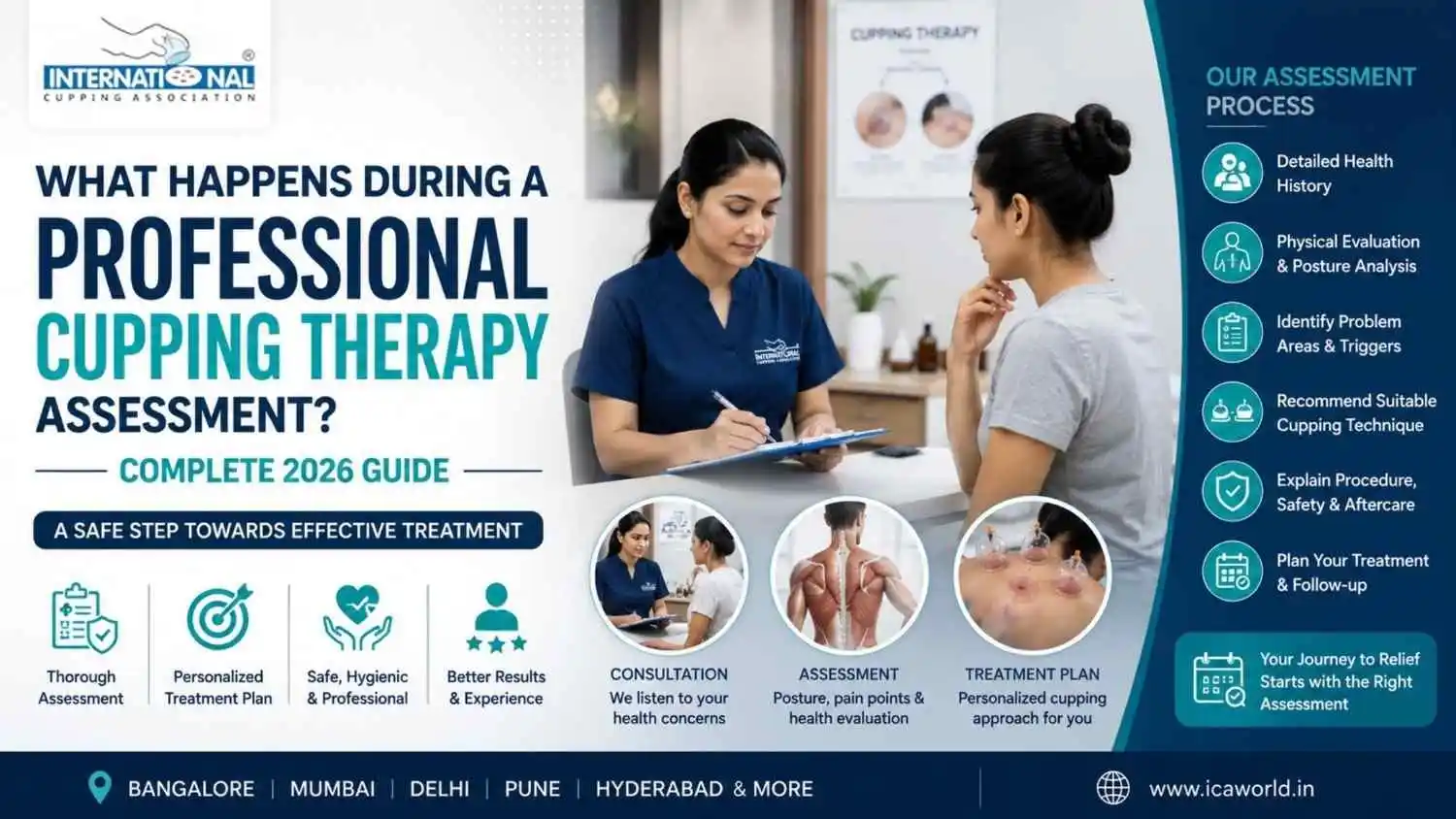
What Is a Cupping Therapy Assessment? The Consultation Process Explained
A trustworthy cupping session starts long before the first cup touches your skin. Here’s exactly what a professional assessment should look like — and the questions worth asking before you book.
Quick answer: A cupping therapy assessment is the initial process a qualified practitioner uses to understand a patient’s symptoms, health history, physical condition, treatment goals and suitability for cupping therapy before starting a session. A professional assessment is much more than asking “Where does it hurt?” — the practitioner considers the patient’s overall condition, examines relevant areas, identifies possible risks and develops an individualized treatment approach. For people searching for cupping therapy in Bangalore, Mumbai, or other parts of India, understanding this process can help them choose a clinic that prioritizes professional care rather than simply offering a quick cup application.
Why Is a Cupping Consultation Important?
Cupping therapy should not be approached as a one-size-fits-all treatment. The same technique may not be appropriate for every person, even when two people report similar symptoms. A proper cupping consultation allows the practitioner to understand the individual behind the symptoms. It also provides an opportunity to identify conditions where cupping may need to be modified, postponed, or avoided.
For example, someone experiencing back pain after exercise may require a very different approach from someone with long-standing pain associated with a diagnosed medical condition. Professional assessment therefore helps connect the patient’s concerns with an appropriate and individualized treatment plan.
What Happens During a Professional Cupping Therapy Assessment?
A professional assessment generally follows several important stages. The exact process varies according to the practitioner’s qualifications, the clinic, the type of cupping being considered, and the patient’s individual circumstances.
1. Initial Patient Consultation
The assessment usually begins with a conversation between the patient and practitioner. The practitioner may ask about:
- The primary reason for seeking cupping therapy
- Where symptoms are located
- When the symptoms started
- Whether symptoms are constant or intermittent
- Activities that make symptoms better or worse
- Previous injuries
- Existing medical diagnoses
- Previous treatments
- Current medications and supplements
- Relevant allergies
- Lifestyle and physical activity
This conversation helps establish a clear picture before any treatment is performed.
2. Understanding the Patient’s Main Concern
The practitioner will usually ask the patient to describe their primary concern in their own words. Someone may say they have “shoulder pain,” for example, but the practitioner may need to understand whether the discomfort occurs during movement, after exercise, while sleeping, or during prolonged computer use. This distinction matters because symptoms can have different underlying causes. A good cupping therapy assessment therefore focuses on understanding the pattern and context of symptoms rather than simply treating the location where discomfort is reported.
3. Medical and Treatment History
A professional practitioner may review relevant medical history before recommending cupping therapy. This can include previous surgeries, injuries, chronic conditions, previous complementary therapies, and current treatment from other healthcare professionals. Patients should be completely honest during this stage — information about medications, recent procedures, pregnancy, bleeding or clotting problems, skin conditions, and other relevant health factors can be important when determining whether treatment is appropriate.
4. Identifying Contraindications and Precautions
Patient safety is one of the most important reasons for conducting an assessment. Not everyone is an appropriate candidate for every type of cupping therapy. A qualified practitioner should identify potential contraindications and precautions before treatment. Depending on the individual’s circumstances, treatment may need to be modified, postponed, or avoided. For wet cupping or Hijama, additional safety considerations are particularly important because the procedure involves superficial skin penetration and blood exposure. A responsible practitioner should never proceed simply because a patient has requested a particular technique.
5. Physical Assessment
Depending on the practitioner’s professional scope and training, the assessment may include a physical examination of the relevant area. For musculoskeletal concerns, this may involve observing:
- Posture
- Range of movement
- Muscle tightness
- Swelling
- Tenderness
- Movement patterns
- Relevant muscle groups
For example, someone searching for cupping therapy for knee pain may have tightness or weakness involving muscles around the hip, thigh, and lower leg that contributes to altered movement. The purpose of assessment is to understand the broader picture rather than automatically placing cups over the most painful point.
6. Understanding Muscle and Soft-Tissue Involvement
Cupping therapy is commonly used as a complementary approach for muscular tension and soft-tissue discomfort. During an assessment, the practitioner may evaluate surrounding muscles and tissues to determine whether muscular tightness could be contributing to the patient’s symptoms. This can be particularly relevant for:
- Neck and shoulder tension
- Lower-back discomfort
- Sports-related muscle soreness
- Limited mobility
- Muscle stiffness
- Repetitive-strain discomfort
The treatment area may therefore be different from the exact location where the patient feels pain.
7. Discussing the Patient’s Treatment Goals
A professional cupping consultation should also establish what the patient hopes to achieve. Different patients may have very different goals — one may say “I want to reduce muscle tightness after training,” another may say “I want to improve my mobility,” while someone else may be seeking complementary support alongside physiotherapy for a musculoskeletal condition. Understanding the goal allows the practitioner to design a treatment plan that is realistic and appropriate.
8. Choosing the Appropriate Cupping Technique
Cupping therapy includes several techniques, and the practitioner should determine which approach is appropriate based on the assessment. Depending on the patient’s needs and professional scope, options may include:
🫙
Dry Cupping
Uses suction without skin incisions. Commonly used for muscular tension, mobility work and recovery-focused applications.
💆
Moving Cupping
Cups are moved across the skin using an appropriate medium to address larger areas of soft-tissue tension.
⏱️
Static Cupping
Cups remain in selected locations for a predetermined period while the practitioner monitors the patient’s response.
🩸
Wet Cupping / Hijama
Involves superficial skin penetration and requires additional training, strict infection-control procedures, appropriate equipment and careful patient screening.
The practitioner should explain the proposed technique before treatment rather than assuming that every patient should receive the same method.
📋
A proper consultation happens before the first cup ever touches your skin
9. Explaining Benefits, Limitations and Expectations
One of the most important parts of a professional assessment is setting realistic expectations. A qualified practitioner should explain what cupping therapy may and may not be able to do. Cupping may be used as a complementary therapy for certain types of pain, muscular tightness, or recovery needs. However, it should not be presented as a universal cure for every medical condition. Patients should also understand that individual responses vary. This transparent approach helps prevent unrealistic expectations and supports informed decision-making.
10. Informed Consent
Before treatment begins, the practitioner should explain the proposed procedure and obtain appropriate consent. The patient should have an opportunity to ask questions about:
- The technique
- Treatment areas
- Expected sensations
- Possible temporary skin marks
- Potential side effects
- Aftercare
- Alternatives or referral where appropriate
Informed consent is an important part of ethical healthcare practice.
11. Creating a Personalized Treatment Plan
After completing the assessment, the practitioner develops a treatment plan based on the patient’s individual needs. Treatment planning may consider:
- Primary symptoms
- Relevant anatomy
- Treatment goals
- Previous response to therapy
- Safety considerations
- Type of cupping
- Treatment areas
- Session duration
- Follow-up requirements
A personalized plan is one of the major differences between professional treatment and an informal cupping session.
What Should You Tell Your Cupping Therapist?
Patients sometimes underestimate how important their own information is during an assessment. Before your appointment, be prepared to discuss your:
🩹
Current Symptoms
Explain what you are experiencing, how long it has been present, and whether it is changing.
📁
Medical History
Mention relevant diagnoses, previous injuries, surgeries, and ongoing treatments.
💊
Medications
Tell your practitioner about medications that may affect bleeding, healing, skin sensitivity, or general treatment safety.
⚠️
Allergies & Skin Sensitivities
This can help the practitioner select appropriate products and avoid unnecessary irritation.
🔁
Previous Cupping Experience
If you have previously received cupping therapy, tell the practitioner how your body responded.
Cupping Therapy Assessment in Bangalore and Mumbai
The assessment process should remain professional whether you are visiting a clinic in Bangalore, Mumbai, Delhi, Hyderabad, Pune, Chennai, or another Indian city. However, patients in major metropolitan areas often have access to many different wellness clinics, physiotherapy centers, sports recovery facilities, and complementary healthcare providers. This makes it particularly important to compare providers based on practitioner qualifications, clinical hygiene, consultation quality, transparency, and patient safety, rather than selecting a clinic simply because it appears first in a “cupping therapy near me” search.
How to Choose a Professional Cupping Therapy Clinic
If you’re searching for cupping therapy centres near me, don’t make location or price your only deciding factors. Consider the following before booking:
🎓
Check Practitioner Training
Ask about the practitioner’s professional education, practical training, and experience.
🧼
Ask About Hygiene
The clinic should have clear infection-prevention procedures, appropriate cleaning protocols, and suitable equipment.
📋
Look for a Proper Consultation
A practitioner who immediately starts treatment without asking about your health history may not be following an appropriate assessment process.
💬
Ask Questions
A professional should be comfortable explaining the proposed treatment, expected experience, potential risks, and aftercare.
🚫
Avoid Guaranteed Claims
Be cautious of clinics claiming that cupping can cure every disease or guarantee a particular medical outcome.
Responsible healthcare communication should be transparent about both potential benefits and limitations.
Why a Professional Assessment Can Improve the Treatment Experience
A good assessment creates a foundation for individualized care. Instead of treating every patient with identical cup placement and suction levels, the practitioner can adapt the session according to the patient’s condition, tolerance, treatment goals, and safety considerations. This patient-centered approach can make the experience more comfortable and clinically responsible. It also helps establish a stronger relationship between practitioner and patient, which is particularly important when treatment involves multiple sessions.
🗂️
A personalized treatment plan is what separates professional care from a quick cup application
What Happens After the Assessment?
Once the assessment is complete and the patient has provided appropriate consent, the practitioner can proceed with the planned therapy or recommend another course of action. In some situations, the practitioner may recommend consultation with a doctor, physiotherapist, or another qualified healthcare professional before treatment. This is not a failure of the assessment — in fact, knowing when not to provide treatment is an important part of professional practice.
How Long Does a Cupping Therapy Assessment Take?
There is no universal duration because assessments vary according to the patient’s concerns and the type of treatment being considered. A first appointment may take longer than subsequent sessions because the practitioner needs time to collect medical history, understand symptoms, discuss goals, and develop a treatment plan. A rushed consultation may not provide enough opportunity to identify relevant safety considerations.
Can You Get Cupping Therapy Without an Assessment?
Some informal providers may offer treatment without a detailed consultation, but this is not the ideal approach. A professional assessment helps identify contraindications, understand the patient’s goals, select appropriate techniques, and establish realistic expectations. For this reason, patients should prioritize clinics that make assessment and consultation an integral part of the treatment process.
Why Assessment Matters for Wet Cupping and Hijama
The need for careful assessment becomes particularly important when considering wet cupping. Because Hijama involves superficial skin penetration and blood exposure, practitioners need to pay close attention to infection control, bleeding risk, skin integrity, patient history, and appropriate aftercare. Patients should never choose wet cupping simply because it is advertised as a more powerful version of dry cupping. The appropriate technique should be determined through professional assessment and informed discussion.
Your Cupping Therapy Journey Should Begin With the Right Questions
Before booking your first appointment, consider asking the clinic:
- “Who will assess me?”
- “What information do you need about my health history?”
- “Which type of cupping do you recommend and why?”
- “What hygiene and infection-control procedures do you follow?”
- “What should I expect during and after treatment?”
These questions can help you identify a provider that takes professional practice seriously.
Looking for Professional Cupping Therapy in India?
If you’re searching for cupping therapy in Bangalore or Mumbai, your first priority should be finding a qualified practitioner who places patient assessment and safety at the center of treatment. At ICA World, professional education and clinical practice are built around understanding the principles of cupping therapy, patient assessment, safety, appropriate technique selection, and responsible treatment planning. If you’re considering cupping therapy for pain management, muscle recovery, mobility, or general wellness, speak with a qualified practitioner to determine whether the therapy is appropriate for your individual situation.
Frequently Asked Questions About Cupping Therapy Assessment
1. What is a cupping therapy assessment?
A cupping therapy assessment is a pre-treatment consultation in which the practitioner reviews your symptoms, medical history, treatment goals, and relevant safety factors before developing an individualized treatment plan.
2. Why is patient assessment important before cupping therapy?
Assessment helps practitioners identify contraindications, understand the possible contributors to symptoms, choose an appropriate technique, and determine whether cupping therapy is suitable.
3. What questions will a cupping therapist ask?
A practitioner may ask about your symptoms, medical history, previous injuries, medications, allergies, lifestyle, previous treatments, and what you hope to achieve through therapy.
4. Does the practitioner examine the painful area?
Depending on their professional training and scope of practice, the practitioner may assess movement, posture, muscle tightness, tenderness, and other relevant factors before selecting treatment areas.
5. Will cups always be placed directly over my pain?
Not necessarily. A practitioner may assess surrounding muscles and tissues because the area contributing to discomfort may not be exactly where the patient feels the symptom.
6. Is an assessment required before wet cupping or Hijama?
A careful assessment is particularly important before wet cupping because the procedure involves superficial skin penetration and requires additional safety and infection-control considerations.
7. Can I request a specific cupping technique?
You can discuss your preference with your practitioner, but the final technique should be selected based on professional assessment, safety considerations, and your individual treatment goals.
8. How long does a cupping consultation take?
The duration varies according to the patient’s condition and whether it is a first consultation or follow-up appointment. Initial assessments generally require more time because more information needs to be collected.
9. What should I tell my cupping therapist before treatment?
Tell the practitioner about relevant medical conditions, medications, allergies, previous surgeries or injuries, current symptoms, and any previous reactions to cupping or similar therapies.
10. Can a cupping therapist refuse treatment?
Yes. If the practitioner identifies a contraindication, significant safety concern, or condition requiring medical evaluation, they may postpone treatment or recommend referral to another healthcare professional.
11. Is cupping therapy suitable for everyone?
No. Cupping is not appropriate for everyone or every medical condition. Suitability should be determined after considering the individual’s health history and treatment circumstances.
12. Can cupping therapy replace medical treatment?
Cupping should not automatically replace diagnosis or treatment provided by a qualified medical professional. It is generally best considered a complementary therapy where appropriate.
13. How do I find a professional cupping therapy clinic near me?
Look for trained practitioners, proper patient consultation, transparent treatment information, strong hygiene practices, and professional communication. Don’t choose a provider solely on proximity or price.
14. Is cupping therapy assessment available in Bangalore?
Professional cupping clinics and practitioners are available in Bangalore. When selecting a provider, verify their training, experience, hygiene standards, and consultation process.
15. Can I find professional cupping therapy in Mumbai?
Yes. Mumbai has a growing wellness and complementary healthcare sector. Patients should evaluate providers based on professional qualifications, safety procedures, and individualized assessment.
Final Takeaway
A cupping therapy assessment is the foundation of responsible treatment. It gives the practitioner an opportunity to understand your symptoms, review relevant health information, identify safety considerations, discuss your goals, and select an appropriate treatment approach.
Whether you’re looking for cupping therapy in Bangalore, Mumbai, or elsewhere in India, don’t focus only on finding the closest clinic. Look for a practitioner who takes the time to assess you properly and explains the treatment before beginning.
Professional cupping therapy is not simply about putting cups on the body. Assessment, treatment planning, technique selection, hygiene, informed consent, and aftercare are all important parts of a professional patient experience.
If you’re considering cupping therapy, start with a consultation and let a qualified practitioner determine whether it is appropriate for your individual needs.