
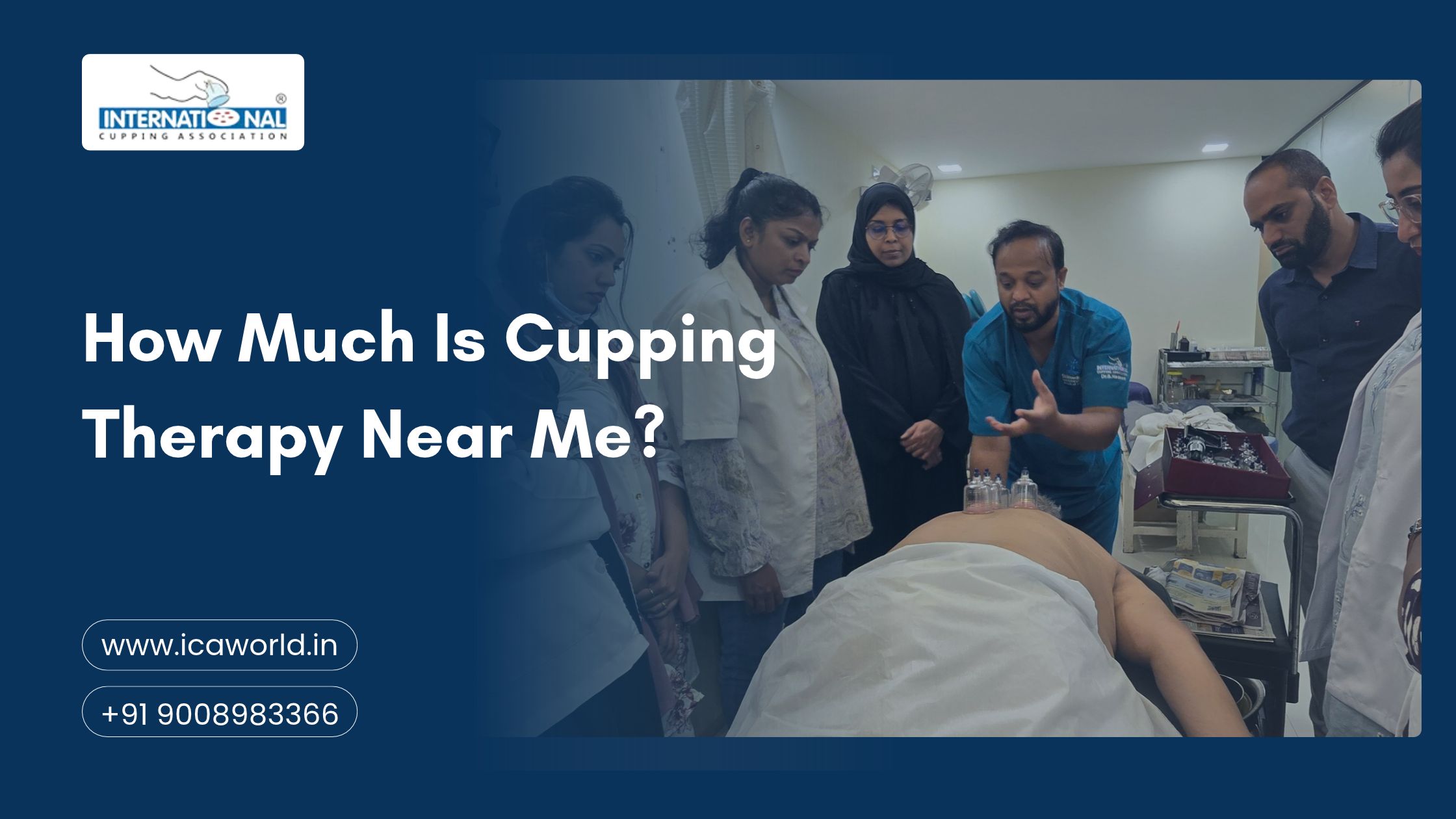
Choosing the right institute is one of the most important decisions when beginning your journey in cupping therapy.
Many students initially focus on course duration, fees and certificates. While these are important considerations, there is another question worth asking:
What will I actually learn, and how will the training help me develop my knowledge and practical skills?
Cupping therapy is a subject that combines theoretical understanding, traditional knowledge, practical demonstrations, safety awareness and professional responsibility. Learning it effectively requires more than simply watching demonstrations or memorising procedures.
At the International Cupping Association (ICA), the focus is on structured education, practical learning, guidance from experienced trainers and opportunities for continued professional development.
This article explores what students should look for in a professional cupping therapy training programme and how a structured learning approach can support their educational journey.
1. Why Structured Learning Matters in Cupping Therapy
Imagine joining a training programme where you are shown different techniques without first understanding the fundamentals.
You may learn the names of different cups and procedures, but will you understand the principles behind them?
Will you know the importance of anatomy, precautions, hygiene and professional responsibilities?
This is why structured learning matters.
A well-organized educational programme should introduce subjects progressively, allowing students to develop foundational knowledge before moving towards more specialized topics.
A structured cupping therapy curriculum may include:
- Introduction and history of cupping therapy.
- Fundamentals and traditional concepts.
- Basic anatomy and physiology.
- Different classifications of cupping techniques.
- Equipment awareness and appropriate handling.
- Indications, contraindications and precautions.
- Hygiene and infection prevention.
- Professional ethics and communication.
- Practical demonstrations and supervised learning.
- Assessment and continued education.
Each subject contributes to a broader understanding of the discipline.
At ICA, structured educational programmes are intended to help students approach cupping therapy systematically rather than treating it as a collection of disconnected techniques. Explore our Cupping Therapist Course in Bangalore to see how this works in practice.
📚
Structured learning builds fundamentals before specialised topics
2. Learn from Experienced Trainers
A trainer plays an important role in a student’s educational journey.
Books and online resources can introduce concepts, but an experienced subject trainer can help explain complex topics, answer questions and connect theoretical knowledge with practical demonstrations.
Students should look for trainers who can:
- Explain fundamental concepts clearly.
- Demonstrate appropriate techniques.
- Discuss professional responsibilities.
- Explain safety precautions and limitations.
- Encourage questions and academic discussions.
- Provide constructive feedback during learning.
At ICA, learning from experienced trainers is an important part of the educational approach.
The objective is not simply to demonstrate a technique but to help students understand its principles, appropriate context and limitations.
Students should also remember that trainer experience and qualifications are important considerations, particularly when programmes include specialised or invasive techniques.
3. Practical Learning: Turning Knowledge into Skills
One of the most important components of skill-based education is practical learning.
Reading about a procedure and observing it in a classroom are useful educational activities. However, developing practical competence requires appropriate instruction, supervised practice and feedback.
A good practical learning environment should help students understand:
🧰
Equipment familiarity
Recognising different types of cups and understanding their intended educational applications.
🔍
Technique awareness
Understanding the principles and differences between techniques included in the curriculum.
🧼
Professional preparation
Learning about appropriate hygiene, equipment handling and preparation of the learning environment.
👀
Observation and demonstration
Watching trainers explain procedures and identify important considerations.
🤲
Supervised practice
Developing permitted practical competencies under appropriate supervision, consistent with the student’s qualifications and training level.
💡
Feedback and improvement
Understanding mistakes, correcting technique-related misunderstandings and improving practical knowledge.
ICA places importance on practical, hands-on educational activities because students need opportunities to connect what they learn in theory with appropriate practical competencies. Our 3-day cupping therapy workshop is a good way to experience this first-hand.
For invasive techniques involving blood exposure, practical education requires specialised safeguards, appropriate qualifications, lawful authority and suitable clinical supervision. Classroom participation or a course certificate alone does not establish permission to perform such procedures.
4. Why Safety and Hygiene Are Part of Professional Education
A responsible cupping therapy training programme should never treat safety as an additional topic that students can ignore.
Safety and hygiene must be integrated into the learning process.
Students should develop an understanding of:
- Hand hygiene.
- Equipment cleaning and appropriate disinfection.
- Personal protective equipment.
- Skin assessment and relevant precautions.
- Infection prevention.
- Sharps and biomedical waste safety where applicable.
- Professional documentation.
- Informed consent and confidentiality.
- Recognition of adverse reactions and appropriate referral.
This knowledge is particularly important when learning about wet cupping, which involves skin penetration and blood exposure.
Students should understand that the safety requirements of dry cupping and wet cupping are not identical.
A responsible educational environment encourages learners to recognise their limitations and seek appropriate professional guidance when necessary.
ICA’s focus on responsible learning includes the importance of understanding safety, hygiene and professional practice. Read more about cupping treatment and how safe practice is approached.
5. The Importance of Student Interaction and Doubt Clarification
Learning becomes more meaningful when students can ask questions and participate actively.
Sometimes, students hesitate to ask questions because they feel that their doubts are too basic.
However, no educational question should be considered unimportant if it helps clarify a subject.
An effective learning environment should encourage:
- Interaction between trainers and students.
- Clarification of difficult concepts.
- Discussion of practical situations.
- Revision of important topics.
- Constructive feedback.
- Academic discipline and participation.
Students also have a responsibility to attend classes regularly, revise their lessons, complete assigned activities and maintain professional behaviour during practical sessions.
At ICA, student participation and continued engagement are important aspects of the learning experience.
6. Learning Does Not End with Course Completion
Completing a course is an educational milestone, but it should not be considered the end of learning.
The field of healthcare and complementary wellness education continues to develop through new research, discussions, educational resources and professional experiences.
Students and practitioners should develop a habit of continued learning.
Some useful activities include:
- Revisiting foundational concepts.
- Reading relevant academic publications.
- Attending educational seminars and workshops.
- Participating in professional discussions.
- Learning about updated hygiene and safety practices.
- Developing communication and teaching skills.
- Exploring further education according to individual eligibility.
ICA encourages continued education and professional development so that students remain connected with learning opportunities even after completing an individual programme.
🔄
Continued education keeps knowledge, hygiene and safety practices up to date
7. Student Support: Why the Learning Environment Matters
An institute’s responsibility should not be limited to conducting classes and issuing certificates.
A supportive educational environment can make the learning journey more organised and meaningful.
Students should consider whether an institute provides access to useful educational resources, opportunities to clarify doubts and information about further learning.
At ICA, student development is supported through an educational approach that emphasises learning resources, student engagement and continued education.
Some important aspects of a supportive learning environment include:
📖
Educational resources
Study materials and learning references that help students revise important topics.
🧑🏫
Academic guidance
Opportunities to clarify doubts and understand course expectations.
👥
Learning community
Interaction with fellow students and participation in educational activities.
🚀
Continued education
Opportunities to explore further training and professional development.
🙌
Student engagement
Participation in association activities and learning initiatives.
Students should also take ownership of their education by remaining active, asking relevant questions and regularly updating their knowledge.
8. How to Choose the Right ICA Training Programme
Not every student has the same educational background or learning objective.
Some may be beginners, while others may already have relevant healthcare or wellness qualifications.
Therefore, selecting a programme should begin with understanding your own educational requirements.
ICA offers different cupping therapy educational programmes for prospective students to explore, including the Cupping Therapist and Cupping Therapy Assistant Course and the Cupping Therapy Assistant Course.
When comparing programmes, consider the following:
| Consideration | What to understand |
|---|---|
| Course level | Is it a certificate, diploma or workshop? |
| Eligibility | What educational background is required? |
| Curriculum | Which subjects are included? |
| Duration | How much time is required? |
| Practical learning | What demonstrations and supervised activities are included? |
| Assessment | How is student learning evaluated? |
| Certification | Who issues the certificate and what does it represent? |
| Further learning | Are additional educational opportunities available? |
Before admission, request the latest course syllabus, fee structure, eligibility requirements and certificate details.
It is also important to understand that a course completion certificate is not automatically a statutory licence, government qualification or professional registration. Any claims of formal recognition should be verified against the exact qualification and awarding body. Students must independently check applicable professional and local requirements.
9. From Student to Lifelong Learner: The ICA Educational Philosophy
At the International Cupping Association, education is viewed as an ongoing process.
The objective is to encourage students to develop knowledge, understand professional responsibilities and remain connected with educational opportunities.
ICA’s approach brings together five important elements:
🎓
1. Education
Developing a sound theoretical foundation.
🛠️
2. Training
Learning through demonstrations and appropriate practical activities.
👨🏫
3. Guidance
Benefiting from trainers with relevant knowledge and experience.
🤝
4. Engagement
Participating in educational activities and student learning opportunities.
📈
5. Development
Continuing to expand knowledge through further education.
This approach encourages students to look beyond simply completing a course.
A meaningful educational journey involves curiosity, discipline, practical learning and a commitment to responsible professional development.
10. Frequently Asked Questions (FAQs)
Q1. Why is practical training important in cupping therapy?
Practical training helps students connect theoretical knowledge with appropriate skills. Demonstrations, supervised educational activities and constructive feedback can help students develop a better understanding of techniques, equipment and professional responsibilities.
Q2. What should a good cupping therapy training programme include?
It should cover foundational concepts, anatomy, technique classifications, safety, hygiene, contraindications, professional ethics and appropriate practical learning. The exact curriculum should match the course level and student eligibility.
Q3. Can beginners join ICA cupping therapy programmes?
Admission depends on the eligibility requirements of the individual programme. Prospective students should contact ICA to understand the educational prerequisites before applying.
Q4. Does ICA provide practical training?
ICA’s educational approach includes practical demonstrations and hands-on learning opportunities. The exact practical components depend on the programme, course level, student qualifications and applicable requirements.
Q5. Is continued education important after completing a cupping therapy course?
Yes. Continued education helps students and practitioners expand their knowledge, review professional responsibilities and remain engaged with developments in the field.
Q6. Does completing an ICA course automatically provide a professional licence?
No. Course completion and statutory professional licensing or registration are different matters. Students should verify the exact status of the certificate, their professional eligibility and applicable legal requirements.
11. Take the Next Step in Your Cupping Therapy Education with ICA
The quality of your education matters.
A good learning experience should help you understand not only how a technique is demonstrated, but also its principles, limitations, safety considerations and professional responsibilities.
At the International Cupping Association, the emphasis is on structured education, experienced trainers, practical learning opportunities, student engagement and continued development.
If you are interested in learning cupping therapy, explore the available ICA programmes and identify the course that aligns with your educational background and learning objectives. Looking for treatment instead? Book our cupping therapy service in Bangalore.
Your Cupping Therapy Learning Journey Starts with ICA!
Explore educational programmes and take a step towards developing your knowledge and practical skills.
International Cupping Association (ICA)
✔ Structured educational programmes
✔ Experienced trainers
✔ Practical learning opportunities
✔ Continued education
✔ Student development and support
🌐 Website: www.icaworld.in
📞 Contact: 9008983366
Learn with Purpose. Develop Your Skills. Progress with Knowledge.