Dry Cupping vs Wet Cupping: Key Differences Every Beginner Should Know
Cupping therapy is growing fast across India as a complementary approach to muscle recovery, relaxation and pain management — but most people searching for cupping therapy in Bangalore, cupping therapy in Mumbai, or professional Hijama therapy aren’t sure how dry cupping and wet cupping actually differ. Here’s the complete, practitioner-level breakdown.
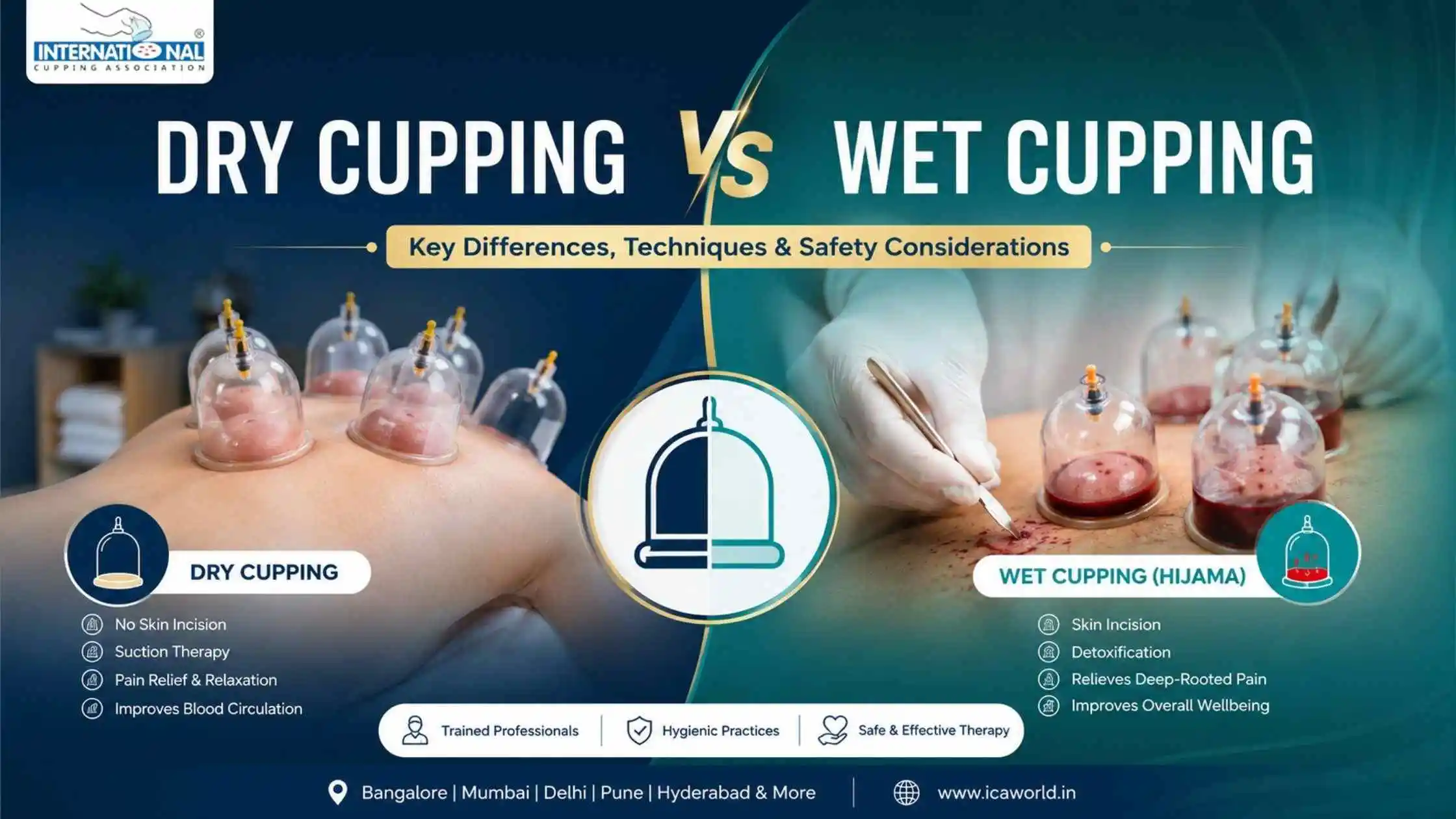
Quick answer: Dry cupping uses suction without breaking the skin. Wet cupping, commonly known as Hijama, involves suction plus controlled skin puncturing and the collection of a small amount of blood. Because wet cupping involves blood exposure, hygiene, sterilization, single-use equipment and appropriate screening matter far more than with dry cupping.
What Is Cupping Therapy?
Cupping therapy is a traditional therapeutic practice in which cups are placed on the skin and suction is created inside the cup. The suction lifts the skin and superficial tissues into the cup. Different approaches are used depending on the technique, the treatment objective and the practitioner.
Cupping is practiced across several traditional medicine systems in Asia and the Middle East. Modern practitioners often use mechanical suction devices, while some traditional forms still use heat to create suction. Research into cupping continues, but evidence varies by condition and technique — the National Center for Complementary and Integrative Health (NCCIH) notes that some research suggests cupping may help with pain, though overall evidence isn’t strong enough to confirm effectiveness for many other conditions.
This is why cupping should always be viewed as a complementary therapy — not a replacement for proper medical diagnosis or treatment.
🫙
Dry Cupping — suction cups placed on the skin, no puncturing involved
What Is Dry Cupping?
Dry cupping is a form of cupping in which suction is applied to the skin without making cuts or punctures. The practitioner places cups over selected areas and creates negative pressure. Cups may stay stationary or be moved across the skin, as in moving/massage cupping. Dry cupping can leave temporary circular marks or discoloration that generally fade over time — the important distinction is that the skin is never intentionally pierced.
How Does Dry Cupping Work?
1. Consultation — the practitioner discusses your concerns, health history and treatment goals.
2. Assessment — your health status and treatment goals are reviewed.
3. Preparation — the treatment area is cleaned and prepared.
4. Cup placement — cups are positioned over the selected areas.
5. Suction — negative pressure is created using an appropriate method.
6. Monitoring & removal — comfort and skin response are monitored, then cups are carefully removed.
7. Aftercare — you receive post-treatment guidance.
Common Types of Dry Cupping
🫙
Manual Dry Cupping
A suction cup is placed directly on the selected area and suction is created mechanically.
🔥
Fire Cupping
Heat is traditionally used to create negative pressure before the cup is placed. Because fire is involved, this requires proper training to reduce burn risk.
💆
Massage / Moving Cupping
Oil or another medium is applied and cups are moved gently across the area — often used for wellness and muscle relaxation.
What Is Wet Cupping?
Wet cupping is a form of cupping that involves controlled skin puncturing and the collection of a small amount of blood. It is commonly referred to as Hijama. The basic process involves applying suction, making small superficial skin openings with sterile equipment, then applying suction again so a small quantity of blood enters the cup. The NCCIH specifically notes that wet cupping involves piercing the skin, whereas dry cupping does not.
What Is Hijama?
Hijama is commonly used to refer to wet cupping. The terms are often used interchangeably, though terminology can vary between practitioners and traditions. A professional Hijama therapy session should involve:
Proper client assessment
Informed consent
Treatment planning
Skin preparation
Sterile / single-use equipment
Appropriate infection control
Safe disposal of contaminated materials
Post-treatment guidance
At ICA, the Hijama Cupping Therapy Course includes training in wet cupping, dry cupping, anatomy, pressure points, hygiene protocols and safe treatment procedures.
🩸
Wet Cupping / Hijama — controlled skin puncturing with sterile, single-use equipment
Dry Cupping vs Wet Cupping: Key Differences
The easiest way to understand the difference is to compare the two techniques directly. The defining difference is whether the skin is pierced and blood is collected.
Dry Cupping vs Wet Cupping: Technique Comparison
Dry Cupping Technique
Step 1 — Consultation: The practitioner discusses concerns, health history and goals.
Step 2 — Preparation: The treatment area is prepared and cleaned.
Step 3 — Cup placement: Cups are positioned over selected areas.
Step 4 — Suction: Negative pressure is created using an appropriate method.
Step 5 — Monitoring: The practitioner monitors comfort and skin response.
Step 6 — Cup removal: Suction is released and cups are removed carefully.
Step 7 — Aftercare: You receive appropriate post-treatment instructions.
Wet Cupping / Hijama Technique
Wet cupping requires additional infection control because the skin is intentionally punctured. Because blood exposure is involved, this should never be attempted as a DIY treatment. A professionally managed procedure generally involves:
Step 1 — Health screening: The practitioner reviews relevant health information and determines suitability.
Step 2 — Treatment planning: Appropriate areas and approach are selected.
Step 3 — Skin preparation: The area is cleaned using appropriate infection control procedures.
Step 4 — Initial cupping: Cups are applied to create suction.
Step 5 — Controlled skin puncturing: Small superficial openings are made using sterile equipment.
Step 6 — Second cupping: Suction is applied again so a small amount of blood enters the cup.
Step 7 — Safe disposal: Blood-contaminated materials are disposed of appropriately.
Step 8 — Aftercare: The area is cleaned and you receive aftercare instructions.
Dry Cupping vs Wet Cupping: Which Is Better?
There is no universal answer to whether dry cupping or wet cupping is “better.” The more appropriate question is: which technique, if any, is suitable for your circumstances? Dry cupping may be preferred for a non-invasive approach. Wet cupping may be considered when a trained practitioner determines Hijama is appropriate and you understand the additional precautions involved. Scientific evidence does not establish that wet cupping is universally superior — research quality and outcomes vary, and treatment decisions should be individualized rather than based on claims that one technique is automatically more powerful.
Potential Uses of Cupping Therapy
Muscle tension
Back discomfort
Neck & shoulder stiffness
Sports recovery
General relaxation
Certain pain conditions
ICA’s cupping treatment services include dry cupping, wet cupping and massage cupping, with treatment plans tailored around individual consultation and goals. That said, cupping should not be promoted as a guaranteed cure for chronic disease, serious medical conditions or complex health problems — for persistent or severe symptoms, consult an appropriate healthcare professional. You can also read more in our guide on whether cupping therapy is safe.
Is Dry Cupping Safer Than Wet Cupping?
From an infection and blood exposure perspective, dry cupping does not involve intentional skin puncturing or blood collection, so wet cupping requires additional safety precautions. However, dry cupping is not completely risk-free — according to NCCIH, cupping can cause temporary marks and may sometimes result in skin discoloration, burns, scars or infections, with rare reports of more serious complications.
Wet cupping has additional considerations because equipment can come into contact with blood. Using contaminated equipment between people without proper sterilization can transmit bloodborne infections such as hepatitis B and C. Repeated wet cupping can also contribute to blood loss and, in rare cases, anemia — which is why professional training and infection control are essential.
Important Safety Considerations Before Cupping
🎓
Trained Practitioner
Ask about their education, training and practical experience.
🧼
Hygiene
For wet cupping, ask about skin prep, gloves, sterile equipment, sharps disposal and cleaning.
📋
Disclose Medical History
Share relevant conditions and medications. Never stop prescribed medication for cupping.
🚫
Avoid DIY Wet Cupping
Skin puncturing and blood exposure need professional training and infection control.
⏱️
Don’t Delay Medical Care
NCCIH recommends discussing complementary approaches with your doctor, not postponing care.
Who May Need Extra Caution With Wet Cupping?
Not everyone is an appropriate candidate for wet cupping. A practitioner should conduct proper screening before treatment, particularly where there may be concerns involving:
- Bleeding or clotting disorders
- Significant anemia
- Active skin infections
- Poor wound healing
- Certain medications that affect bleeding
- Pregnancy or other special health circumstances
The exact decision should be made based on individual health status and appropriate professional advice, since wet cupping involves deliberate skin puncturing and blood exposure.
🏥
A hygienic, professionally run cupping therapy treatment room
Cupping Therapy in Bangalore
Bangalore is one of India’s major wellness and healthcare hubs, with growing interest in complementary therapies among working professionals, athletes and wellness seekers. People searching for cupping therapy in Bangalore, cupping treatment in Bangalore, or Hijama therapy in Bangalore should look beyond price alone. Consider:
- Practitioner training
- Hygiene standards
- Consultation process
- Treatment environment
- Transparency about the technique
- Appropriate aftercare
- Realistic treatment claims
ICA provides cupping treatment services and training programs in Bangalore, with a head office in Shivajinagar and a branch office in Frazer Town. If you’re interested in learning professionally, explore the Cupping Therapy Course in Bangalore as part of ICA’s training offerings.
Cupping Therapy in Mumbai
Mumbai is another major Indian city where people increasingly explore complementary wellness and recovery services. If you’re searching for cupping therapy in Mumbai, understanding dry vs wet cupping helps you make a more informed decision. ICA’s Mumbai service offering includes Dry Cupping, Wet Cupping (Hijama) and Massage Cupping, alongside other wellness services.
The same safety principles apply in Mumbai as anywhere else: trained practitioner + appropriate screening + hygiene + suitable technique + informed consent. You can also explore the Cupping Therapist Course in Mumbai and Hijama Cupping Therapy Course in Mumbai offered through ICA’s training network.
Choosing a Cupping Therapy Centre in India
Whether you’re in Bangalore, Mumbai, Delhi, Pune, Hyderabad, Chennai, Kolkata, Mangalore, Gujarat, Jaipur or Kerala, the basic selection criteria stay the same. Look for:
- Qualified practitioners — training and practical competency matter.
- Strong hygiene practices — especially important for wet cupping.
- Proper consultation — treatment should never begin without understanding your health information.
- Clear explanation — a good practitioner explains the technique, sensations, marks and possible risks.
- No exaggerated promises — be cautious of claims like “one session cures everything.”
ICA currently lists cupping treatment services across multiple Indian locations, including Bangalore, Mumbai, Delhi, Kolkata, Pune, Mangalore, Hyderabad, Gujarat, Jaipur, Chennai and Kerala.
Dry Cupping vs Wet Cupping for Beginners
If you’re completely new to cupping therapy, the terminology can feel confusing at first. Here’s a simple way to remember it:
Dry Cupping
Suction only. No skin puncturing.
Wet Cupping
Suction + controlled skin puncturing + small amount of blood collection.
Hijama
Commonly refers to wet cupping.
Massage Cupping
Cups are moved across the skin, generally with lubrication, rather than staying stationary.
Understanding these four terms makes it much easier to discuss your options with a trained practitioner. You may also want to read our detailed piece on Traditional Hijama vs Modern Cupping Therapy and our complete beginner’s guide to Hijama wet cupping in India.
Can You Learn Dry and Wet Cupping Professionally?
Yes. Cupping therapy is also an area of professional training for people interested in wellness and complementary healthcare. A comprehensive training program should cover more than simply where to place cups. A professional curriculum should ideally include:
- Basic anatomy and physiology
- Cupping principles
- Dry cupping techniques
- Wet cupping and Hijama techniques
- Treatment planning
- Contraindications
- Hygiene and sterilization
- Client assessment
- Practical training
- Safety and aftercare
- Professional ethics
ICA’s Hijama Cupping Therapy Course specifically covers wet cupping, dry cupping, anatomy, pressure points, hygiene protocols, safe procedures, consultation and treatment planning. ICA also offers dedicated Cupping Therapist and Cupping Therapy Assistant courses, and you can read how our graduates have progressed in our student success stories.
Dry Cupping vs Wet Cupping: The Bottom Line
Dry cupping creates suction without breaking the skin. Wet cupping, commonly called Hijama, involves controlled skin puncturing and the collection of a small amount of blood — which is why it requires additional infection control. Neither technique is automatically “better.” The right approach depends on you, your health circumstances, your treatment goals and professional assessment.
If you’re considering cupping therapy in Bangalore, Mumbai or another Indian city, choose a trained practitioner and prioritize hygiene and screening over promotional claims or low prices. And if your interest is professional rather than personal, a structured Cupping Therapy Course can give you the theoretical knowledge, practical skills and safety understanding needed to work responsibly in this field.
Frequently Asked Questions About Dry Cupping vs Wet Cupping
1. What is the main difference between dry cupping and wet cupping?
The main difference is skin puncturing. Dry cupping uses suction without breaking the skin, while wet cupping involves controlled skin puncturing and the collection of a small amount of blood.
2. Is wet cupping the same as Hijama?
Wet cupping is commonly referred to as Hijama. Terminology can vary between practitioners and traditions, but Hijama is generally associated with wet cupping.
3. Does dry cupping involve blood?
No. Dry cupping does not intentionally puncture the skin or remove blood.
4. Does wet cupping hurt?
People can experience pressure, pinching or mild discomfort. Individual experiences vary, and a trained practitioner should monitor comfort and use appropriate technique.
5. Is dry cupping completely risk-free?
No. Cupping can cause temporary marks and may sometimes result in skin discoloration, burns, scars or infections.
6. Is wet cupping safe?
Wet cupping can carry risks because it involves skin puncturing and blood exposure. Appropriate screening, hygiene, sterile or single-use equipment where appropriate, and safe disposal procedures are essential.
7. How long do cupping marks last?
Cupping can leave temporary circular marks or discoloration. How long they remain varies between individuals and depends on factors such as suction intensity and individual skin response.
8. Can I do wet cupping at home?
It is not advisable to perform wet cupping without appropriate professional training and infection control. Blood exposure creates additional risks that cannot be managed safely through casual DIY methods.
9. Which is better for beginners, dry or wet cupping?
There is no universal answer. Dry cupping is less invasive because it does not involve skin puncturing, while wet cupping requires additional safety considerations. A trained practitioner should determine whether either approach is appropriate.
10. Where can I get cupping therapy in Bangalore?
ICA provides cupping treatment in Bangalore, with locations listed in Shivajinagar and Frazer Town. You can explore ICA’s Bangalore offering and discuss your needs with the centre before treatment.
11. Is cupping therapy available in Mumbai?
Yes. ICA offers cupping services in Mumbai, including dry cupping, wet cupping and massage cupping.
12. Can I learn Hijama professionally?
Yes. ICA offers a Hijama Cupping Therapy Course covering wet cupping, dry cupping, anatomy, hygiene, safety procedures and practical aspects of treatment.